When The White House Stopped Drinking French Wine


In 1968, Lyndon Johnson issued a decree: From that point forward, only American wines would be served at White House state dinners. It was a protectionist gesture, though, patriotically, it made sense: why would we be serving another country's wines at our state dinners? The gesture came at a time when American wine industry needed a boost, and when soft power signals like this had greater impact than they might today. Johnson was a Texan who drank Cutty Sark. For him it likely wasn't personal, nor an aesthetic argument he was all that invested in.
In 1968, American wine was not particularly well-respected. France had been making serious wine for centuries. Bordeaux and Burgundy were the global standard against which all other wine was measured. Champagne was synonymous with celebration itself. The idea that California could compete at the table where Zhou Enlai was being seated, or the Emperor of Ethiopia, or the Chancellor of West Germany, was a stretch. Johnson likely didn't realize the power of his declaration.
Enter Richard Nixon...
Richard Nixon understood more about wine than Lyndon Johnson. Nixon was a California native who championed the state's wine industry in public while privately preferring Bordeaux. He selected wines for official events himself, and his preferred menu included German Riesling with the first course, California Cabernet for the main, and French Champagne with dessert. A 1970s statesman with the palate of "Mr. Wonderful", he knew French wines were more "haute".

But Nixon being Nixon, he instructed White House staff to pour him a superior (usually French) vintage at formal dinners while guests received a cheaper (often American) version. He served his California obligations to the guests and kept the good French wine for himself.
And yet Nixon produced one of the most consequential moments in American wine history almost by accident. When he made his breakthrough visit to China in 1972 and raised a glass with Premier Zhou Enlai in the toast that opened relations between the two countries, the wine in his glass was a 1969 Schramsberg Blanc de Blancs from Napa Valley. He chose that wine personally. Whatever his private preferences, Nixon understood the diplomatic weight of putting a California wine on the table at the most-watched diplomatic moment of his presidency and letting it represent the country. When he and Kissinger retreated to celebrate privately afterward, the wine was a 1961 Lafite Rothschild. Nixon was nothing if not consistent.
Gerald Ford was less two-faced. Beginning with the state dinner for Italy in September 1974, every wine served at a White House dinner was American. Ford's social secretary stated that the policy was in keeping with the president's commitment to representing everything American at the White House. Ford was from Michigan. He served a Michigan wine (yes, they exist!). Over a decade of American presidents, the decree went out to all the world that American wine could compete with French wine. But could it?

Paris, 1976
Steven Spurrier (not to be confused with the later football coach) was a British wine merchant with a shop in Paris. Also a bit of a provocateur, in May 1976, to mark the American Bicentennial, he organized a blind tasting that put California wines against the best of France. The judges were nine French wine experts, sommeliers and critics from the top end of the Paris establishment. It was assumed that this was to be a useful publicity event for Spurrier's shop and a gentle demonstration of French superiority. Only one journalist showed up to cover it, an American named George Taber writing for Time.
Shockingly, the California wines won. In both categories, red and white, the top scores went to Napa Valley. The winning white was a 1973 Chateau Montelena Chardonnay that retailed for $6.50 a bottle. The winning red was a Stag's Leap Cabernet Sauvignon from a winery that had been founded six years earlier, going up against Chateau Mouton-Rothschild, where winemaking had been going on for three centuries.
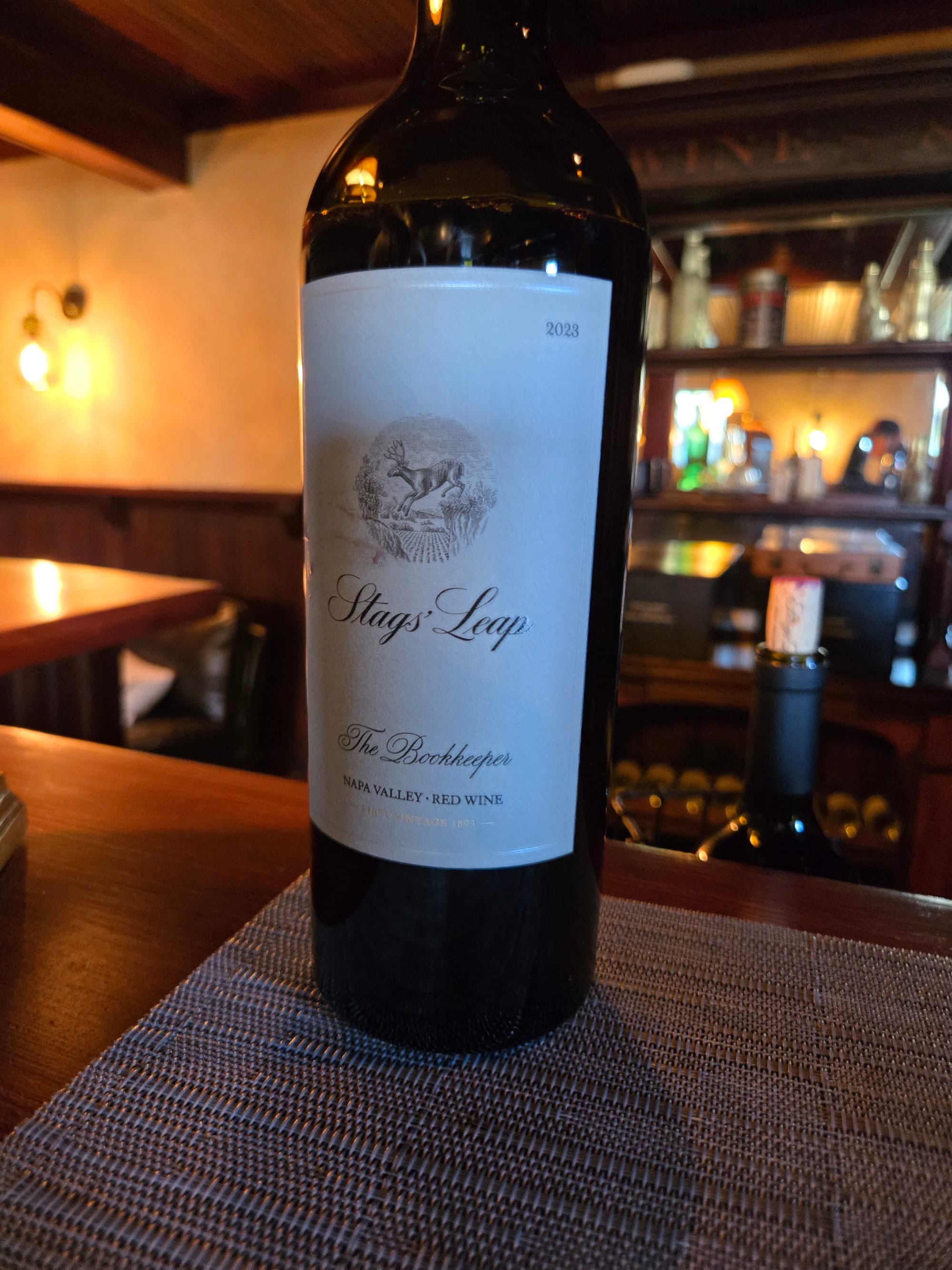
The French judges were not pleased. Some asked for their scorecards back. One argued her scores had been mis-recorded. The French ultimately contended that their wines competed at a disadvantage on the basis that their superior qualities best came through with aging, but in 1986 the same wines were tested a decade out, and the Americans won again.
Taber's 1976 story ran in Time and spread everywhere. The Judgment of Paris, as it immediately became known, not only validated California wine in a way it never had been before, but it restructured the entire global understanding of what wine could come from where. The idea that quality was a European birthright, that certain soils and certain centuries of practice had produced a quality unreachable by newcomers, collapsed that afternoon in Paris.
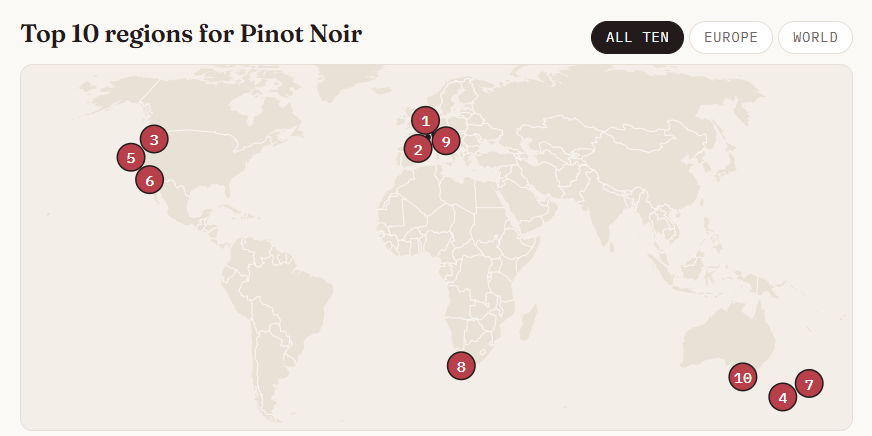
Explore Our Interactive "Best Wine Regions in the World" Tracker
The bottles from that tasting, the Montelena Chardonnay and the Stag's Leap Cabernet, are now in the Smithsonian. The House of Representatives voted that May 24, 1976 was an important date in American history.
The Judgment of Paris appeared to vindicate Ford's decree, and catapulted American wine in global stature. The competition didn't prove American wine was superior to French wine, but it proved American wines could compete.
The White House decree of 1974, prior to the 1976 Judgement, was more than symbolic. Serving American wine at state dinners in front of foreign dignitaries, heads of state, chancellors and kings, was a sustained act of national endorsement at the highest level of visibility the country had. It told the American wine industry that its government believed in it, and also gave them an incentive to become better. California winemakers in the late 1960s and early 1970s knew their product was being poured in front of audiences that would compare it, at least mentally, to what France was making. It pressured them to make better wine.
The number of wineries in California grew from 330 in 1975 to 2,843 by 2023. The first vintage of Opus One, the Napa Valley joint venture between Robert Mondavi and Philippe de Rothschild of Chateau Mouton-Rothschild, was 1979, three years after the Judgment of Paris. Rothschild agreed to partner with Mondavi because Paris had demonstrated that California wine was a competitor.

Ronald Reagan, who took office in 1981 and was a California native who knew wine relatively well, continued the policy and enforced it rigorously, flying his preferred Napa vintages to Embassy events abroad and never serving wine from the same vineyard more than three times. By the time he left office the policy was considered sacrosanct.
The trajectory of American wine over the following half century is one of the stranger national success stories of the postwar era. An industry that barely existed in serious form before Prohibition, that had to restart from scratch after repeal in 1933, that was still being poured apologetically at state dinners in the 1960s, became within a generation one of the world's benchmarks.
Nixon, characteristically, had the last word on the subject. After leaving office, he observed that someday the Chinese might make better wine than the French. He said it as a joke. Given what has happened to Chinese wine investment in the decades since, it is not entirely clear it still is one. This is a topic we have explored here at Capital Frontiers.


