Grading America’s Top Second Cities: Where They Stand and How They Compete


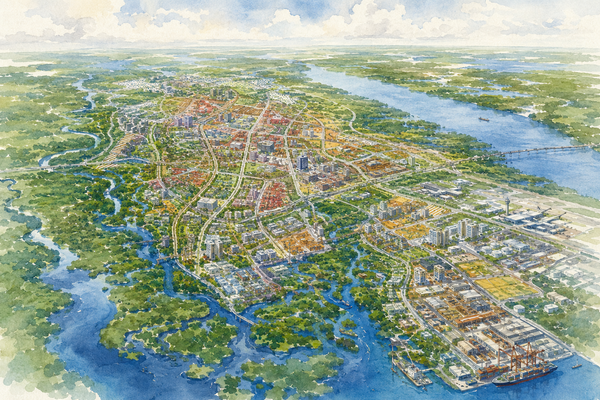
America’s urban hierarchy is defined by its iconic primary cities: New York, Los Angeles, Chicago, Washington, D.C. These are the economic, cultural, and political powerhouses that dominate the national imagination. But just beyond their glare, in their shadows yet distinct from them, exists a class of cities that are neither anonymous suburbs nor fully independent metropolises. These are the second cities, regional hubs with their own gravity, locked in a perpetual struggle to carve out identity and opportunity while competing both with their primary city and other second cities across the country.
What is a Second City?
A second city is a major hub within a metropolitan region where the most well-known, largest, and anchor city is not itself. But don’t mistake second cities for mere satellites. They have heft. They attract businesses, sustain their own urban cultures, and sometimes even outperform their larger neighbors in certain dimensions.
Second cities come with unique dynamics that primary cities don’t face. They have to work harder to be noticed and have to cultivate their own gravitas, whether through business-friendly environments, offbeat cultural niches or quality of life advantages that outshine often chaotic primary cities. Some of them, like Fort Worth, lean into distinct, independent identities, while others, like Jersey City, act as an extension of their primary city’s economic ecosystem. They have to battle for regional investment, talent and resources, and have an uphill battle in trying to prove they can be the place to live, work or visit.
And, critically, they compete not just against their primary cities but against each other. The great second cities, like Oakland (yes, really!), St. Paul, Newark and Arlington, are engaged in an ongoing arms race to attract economic development, livability and cultural magnetism. Some are thriving, and others are struggling in the current economy.
Metrics of a Strong Second City
For this evaluation, we ranked America’s top second cities using a mix of metrics, including:
- Physical Urban Stature: A rough measure of economic vitality and development ambition, urbanism reflects the second city's gravitas as a true city in its own right
- Independent Cultural Identity: The ability to be more than just a spillover of the primary city
- Economic Gravity: How well the city attracts business and retains jobs
- Quality of Life: The balance of affordability, amenities and infrastructure
- Regional Influence: The ability to shape policy and development beyond city limits
Rankings
- Arlington, Virginia (282 tall buildings) - Arlington serves as the Dubai / La Defense true "downtown" to the Washington, DC region. With height limits in DC, Arlington claims the skyline of the region. Pentagon City and Rosslyn have become major business hubs, particularly for large consultancies, secondary agency footprints, and the defense industrial complex industry, while Clarendon and Ballston cater to a younger, educated workforce and are rich with housing. If Washington is the seat of power, Arlington is the seat of money and ambition. Once a sterile campus, Rosslyn has worked hard to accrue a sense of place and is well on its way.
- Jersey City, New Jersey (170 tall buildings) - Once Brooklyn got too expensive for many New Yorkers, Jersey City became the next Manhattan Spillover. Once a bedroom community, Jersey City has transformed into a legitimate competitor to parts of Manhattan and Brooklyn. A financial hub with rapidly rising property values and cultural districts like Journal Square gaining prominence, Jersey City has emerged as a heavyweight.
- Oakland, California (99 tall buildings) - While its national reputation has become dominated by its own version of the Bay Area's dysfunctional politics, high prices and high crime rates, Oakland is an edgy alternative to San Francisco that for many is more affordable than its bigger anchor across the Bay. Oakland is messy, having recently lost several cultural anchors, including its major league sports teams. Nevertheless, it retains appeal as techies and artists priced out of San Francisco look for a new home. Its culture, diversity, and restaurant scene rival its primary city, but a struggle with crime perception and a relatively weak corporate sector hold it back.
- Newark, New Jersey (165 tall buildings) - Newark's downtown isn't great, but in terms of overall heft it is an uder-estimated giant: It has more infrastructure than most second cities (Port Newark, a major airport, rail connections) and a historic downtown with untapped potential. But despite its advantages, Newark still struggles with brand perception and needs stronger corporate momentum.
- Tysons, Virginia (59 tall buildings) - Visiting Tysons on the Silver Line from DC is like stumbling into some Emerald City version of Dubai. A highway-choked office park in the 1970s, Tysons is now a towering edge city with world-class shopping and increasing urban density. It has the potential to be a city in its own right if it can ever become a bit more livable and pleasant at the ground level. Then again, this hasn't stopped Dubai.
- St. Paul, Minnesota (99 tall buildings) - How many people have visited Minneapolis but not St. Paul? St. Paul for sure is overshadowed, but it's sturdy. The more traditional, government-oriented sibling of Minneapolis, St. Paul has character but lacks the economic dynamism of its twin city.
- Fort Worth, Texas (57 tall buildings) - Fort Worth actually has a lot of unique culture and identity. In fact, visitors who expect it to be a mere extension of Dallas are often surprised by how different it feels, how much more accessible and livable it is on the ground, with a surprisingly large cluster of cultural institutions and many projects on the horizon that should make it even better. Fort Worth has museums, Stockyards, and a fiercely independent streak, but it has struggled to energize its downtown economy at the level of nearby Dallas. It continues to lack corporate anchors, and many of the ones it used to have have dried up without a replacement.
- Long Beach, California (63 tall buildings) - So close yet so far. LA's port city has great weather, solid infrastructure, and a growing downtown. But it lacks the pull of LA or even Santa Monica.
- St. Petersburg, Florida (78 tall buildings) - Amid hurricane recovery, St. Pete has over many years quietly become one of the most livable cities in Florida, outshining Tampa in many quality-of-life aspects, though it remains in Tampa’s economic shadow. Its arts and cultural community are strong, but it's still isolated. It also needs to figure out its major projects of the future.
- Norfolk/Virginia Beach, Virginia (52 tall buildings) - The Hampton Roads should be stronger than they are, given their abundance of natural assets including waterways large and small. Lots of waterways also stymie transportation a bit, which also creates a bit of confusion about who's the top dog. Which of these cities is actually the second city? Norfolk has the stronger downtown, but Virginia Beach is the cultural epicenter of Hampton Roads. Strong in defense and port industries, but fragmented governance between the two cities and other nearby cities hold back their full potential.
- Tempe, Arizona (50 tall buildings) - In a metro region without a strong core downtown and a lot of smaller clusters, Tempe really is the most vibrant cultural center in the valley of the sun. With ASU and a growing tech presence, Tempe is quickly becoming Phoenix’s most interesting urban hub.
- Irvine, California (45 tall buildings) - Irvine is in many respects a masterplanned success story, but it's struggling to find its soul. Irvine has jobs, affluence, and safety, but lacks an organic city feel that other second cities cultivate. It's also really far from downtown LA.
- Dayton, Ohio (41 tall buildings) - Dayton is the birthplace of the Wright brothers and the cradle of Neil Armstrong's life. It has always seemed like a mini-Cincinnati, but has really struggled. Strong in history and industry, it lacks major urban appeal compared to Columbus or Cincinnati. Not exactly a true second city, but as the Cincinnati-Dayton corridor targets official status as a single combined statistical population area, Dayton would be the second hub.
- Anaheim, California (28 tall buildings) - The city of Disney. A tourism-driven city with little independent business momentum.
- Akron, Ohio (26 tall buildings) - Being Cleveland's second city isn't easy, and Akron is holding on the best it can. With a struggling primary anchor in Cleveland, nearby Akron is a legacy industrial city with an uncertain future.
Just a Little Bit Too Far
Other cities like Plano, Colorado Springs and Mesa, are too suburban or too far from their primary cities to fully be considered second cities. They may yet evolve, but for now, they remain third cities, mere suburbs or independent hubs altogether.
Final Thoughts
Second cities occupy a fascinating space in America’s urban hierarchy. The best of them have found ways to thrive despite the gravitational pull of their larger neighbors. Others are still fighting for their moment. But as affordability and economic shifts push people further from primary cities, the future might belong to the second cities that position themselves as first in quality of life, culture, and opportunity.